TACCOM press kit
Everything on this page may be quoted or republished. For anything else, email Press@taccom.io.
Fast facts
The numbers, checkable against the live site.
| Product | TACCOM v2, a handheld push-to-talk radio for multiplayer games. Two editions: Wired (USB-C powered) and Wireless (battery powered, with the premium broadcast button). |
| Price | $99 Wired, $199 Wireless. Custom shell and faceplate colors, laser engraving, callsign, encoder knob, and antenna options add $1 to $20 each. |
| How it ships | Made to order in the USA and shipped within 7 days. |
| Where it's made | Designed, engineered, and assembled by hand in the USA. Currently ships to US addresses. |
| Games | DCS World, Star Citizen, EVE Online, Nuclear Option, plus an open Misc band. Game-agnostic by design: if your squad can hear a radio, it works. |
| Free tier | Anyone can claim a callsign and listen to live public frequencies in the browser at taccom.io. No hardware required. |
| Private frequencies | Squads can claim a locked, access-controlled frequency for $9.99 per month. |
| Guarantee | One year warranty and a 30-day money-back guarantee on every radio. |
| Company | BlueUplink, founded by Edward. TACCOM is one of several hardware products. |
Photos & video
Click any download link for the full-resolution original. All images may be republished for coverage of TACCOM.
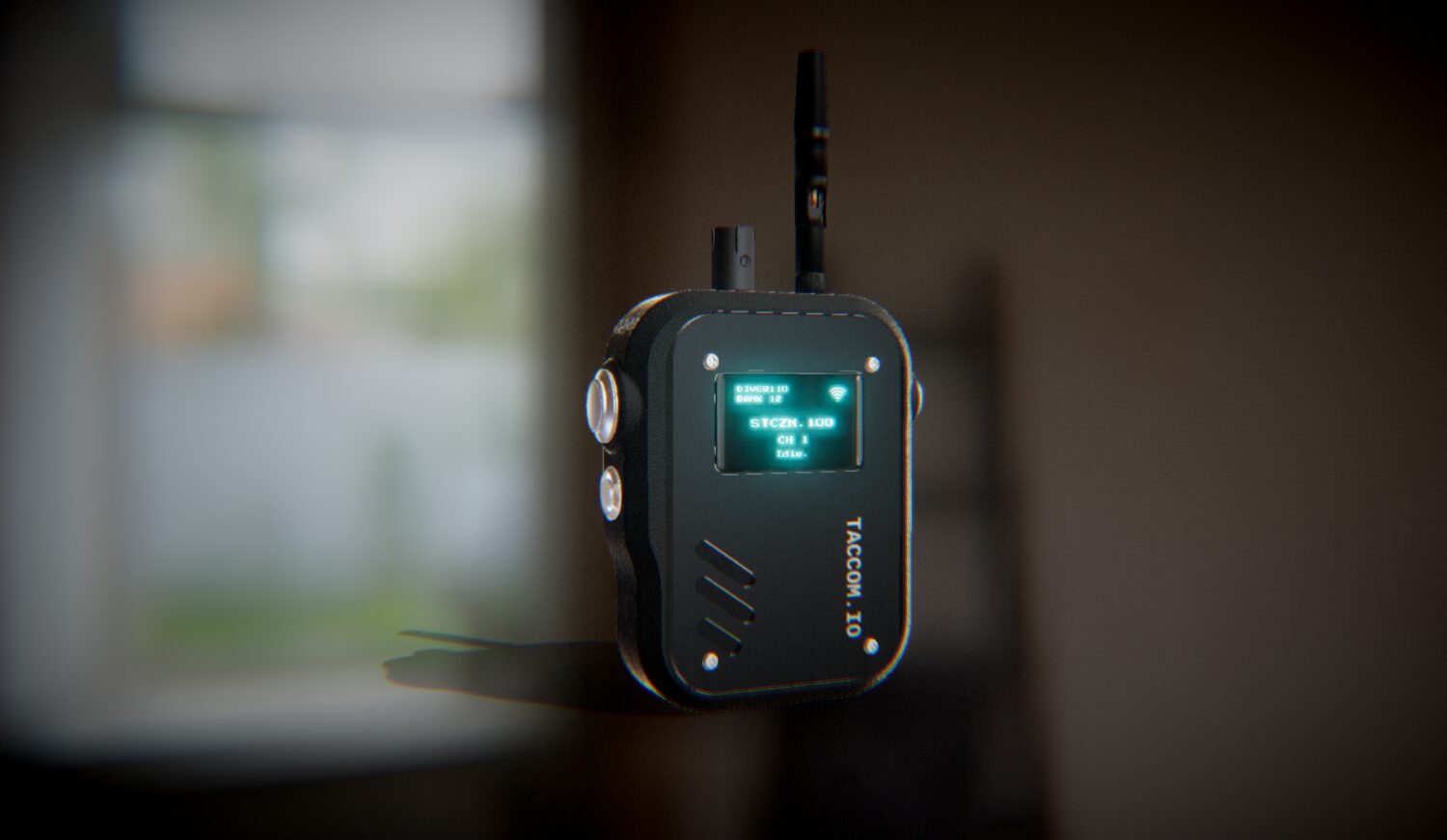
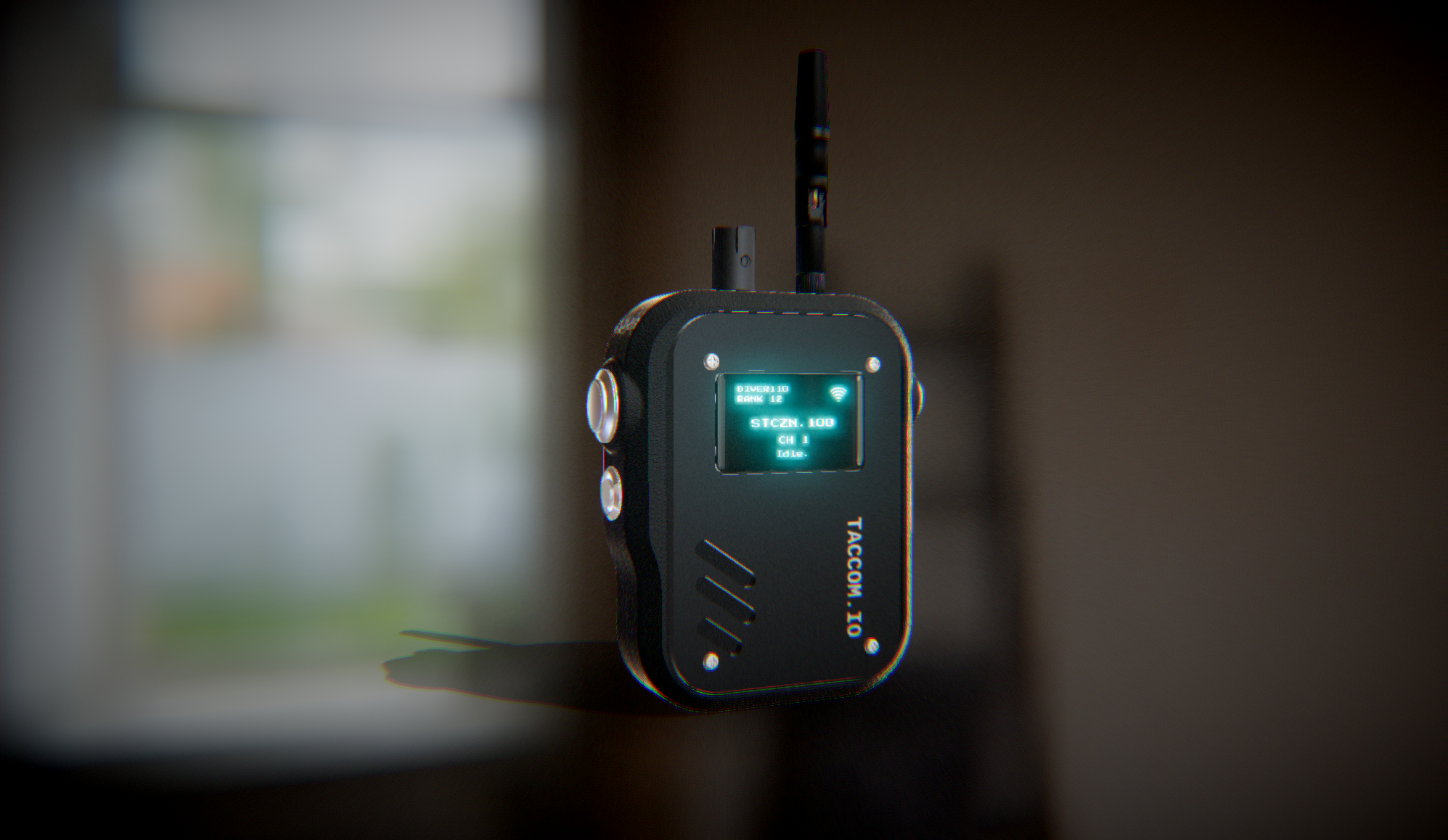
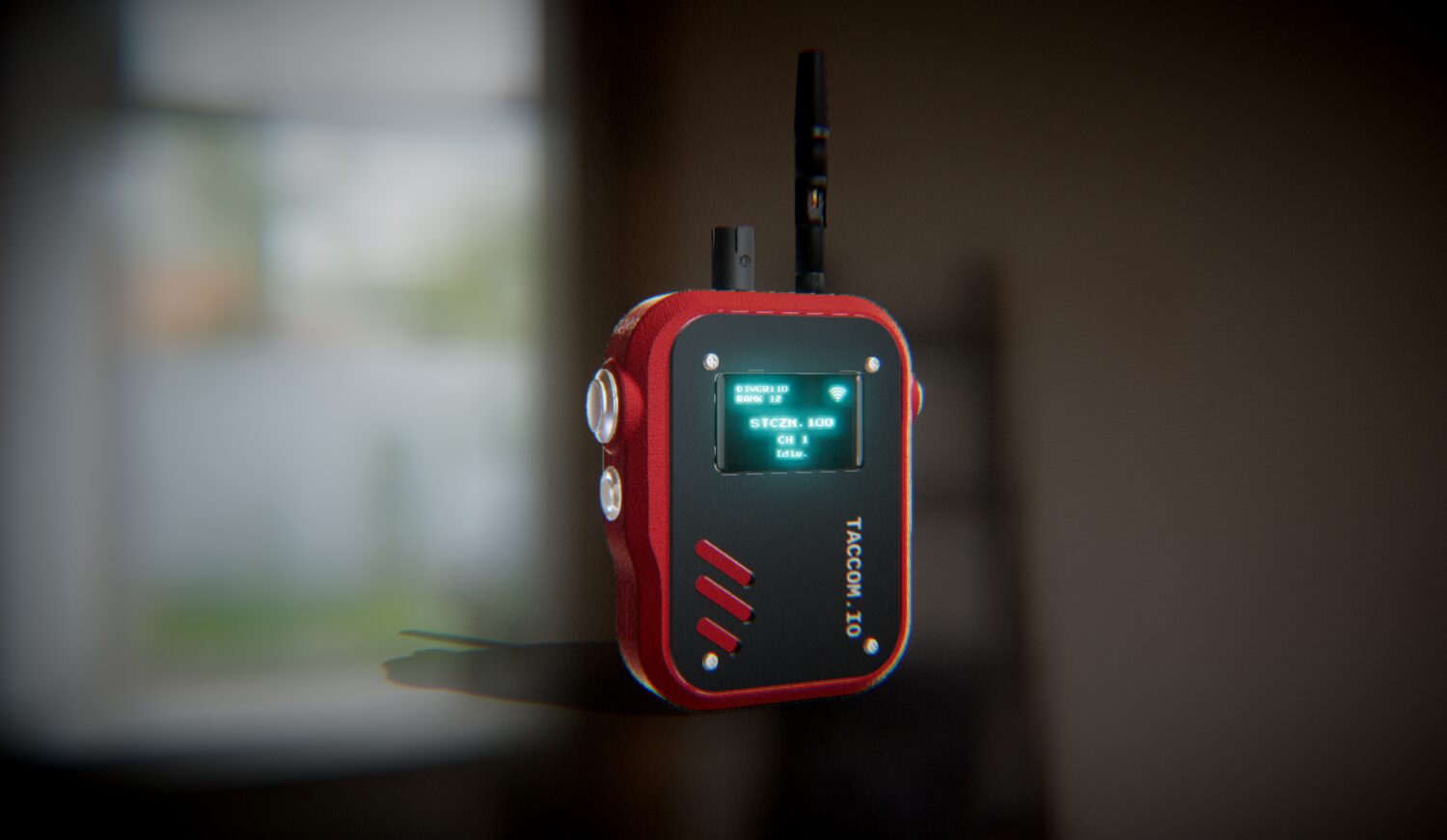
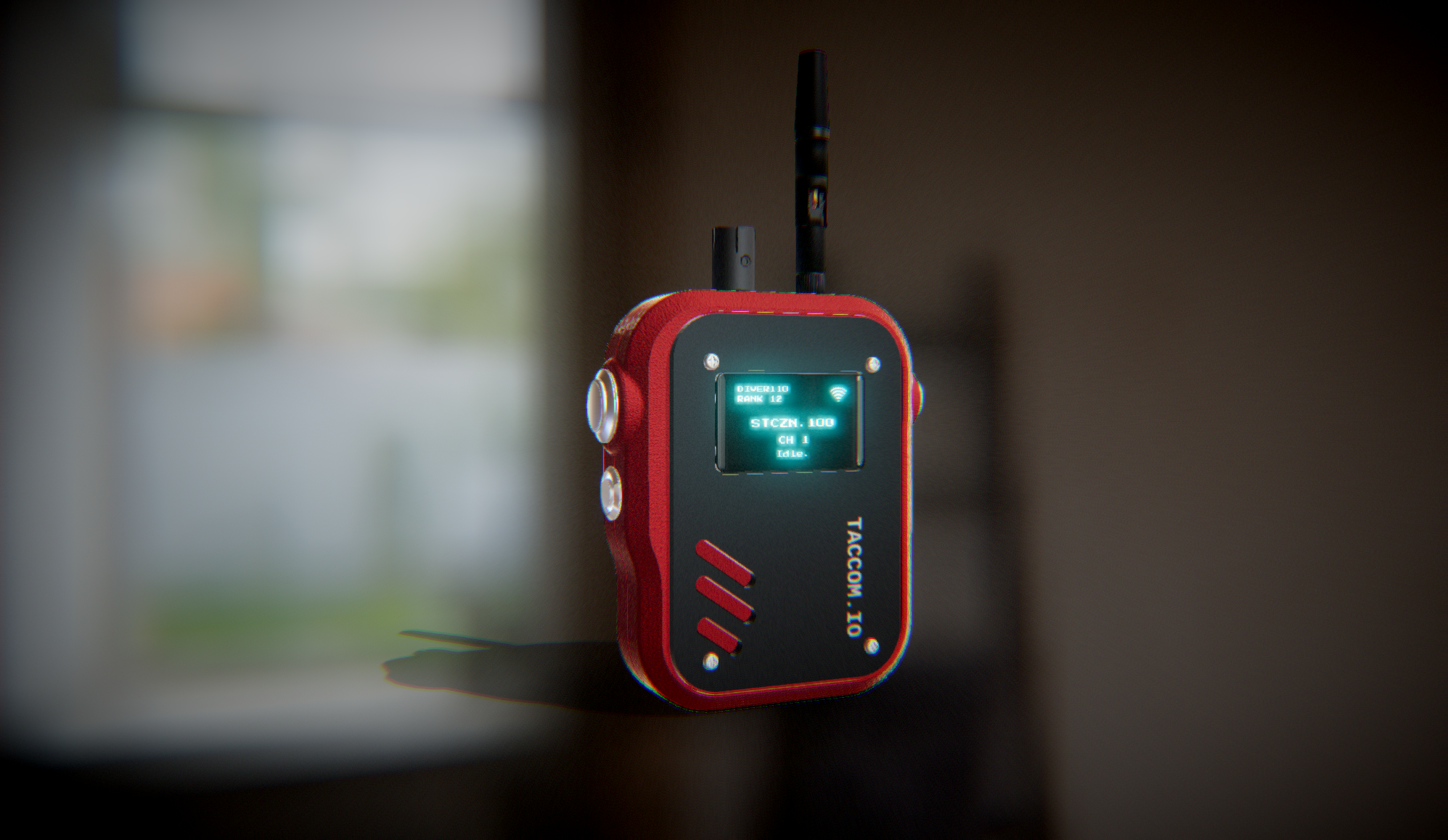
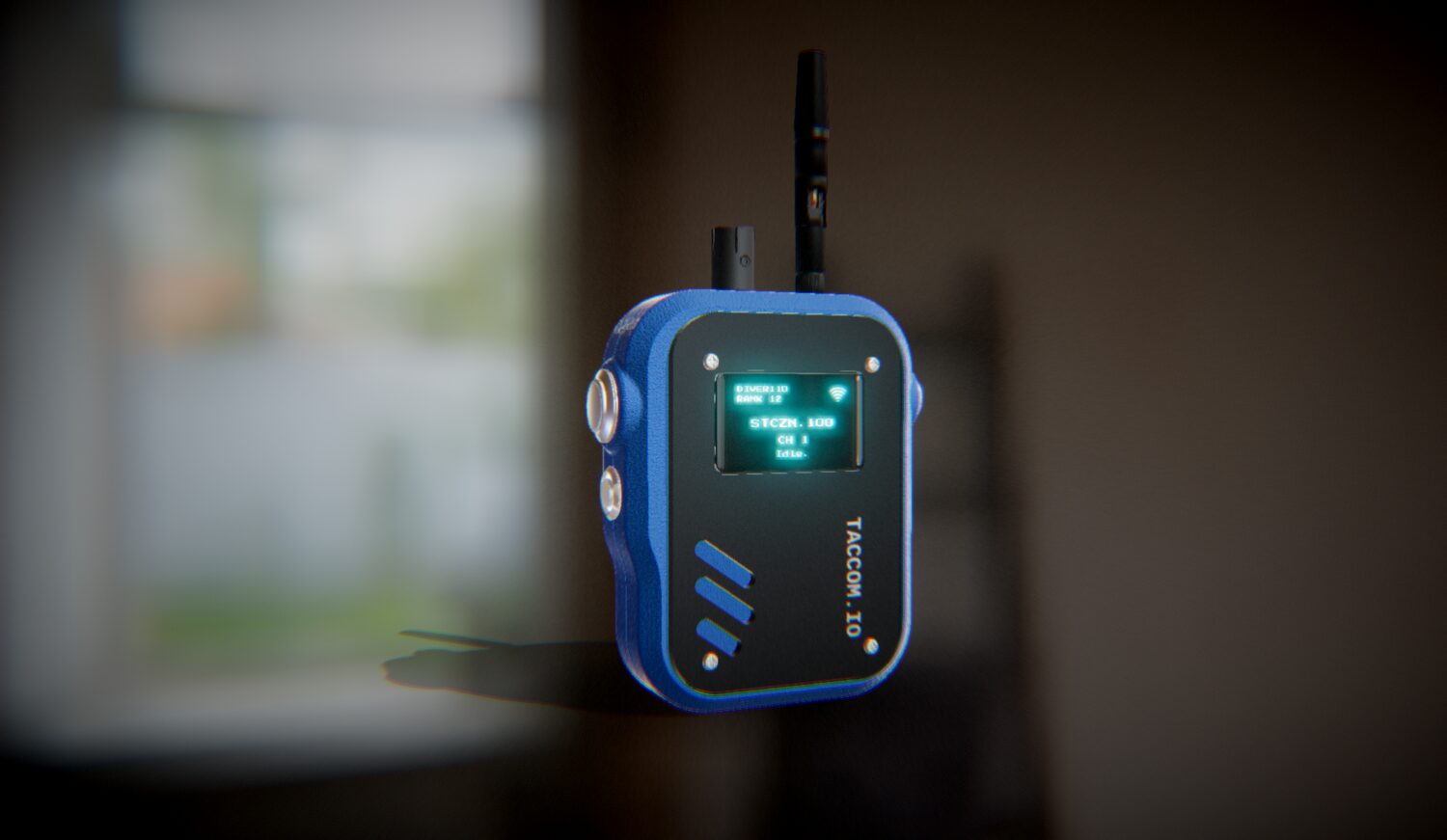
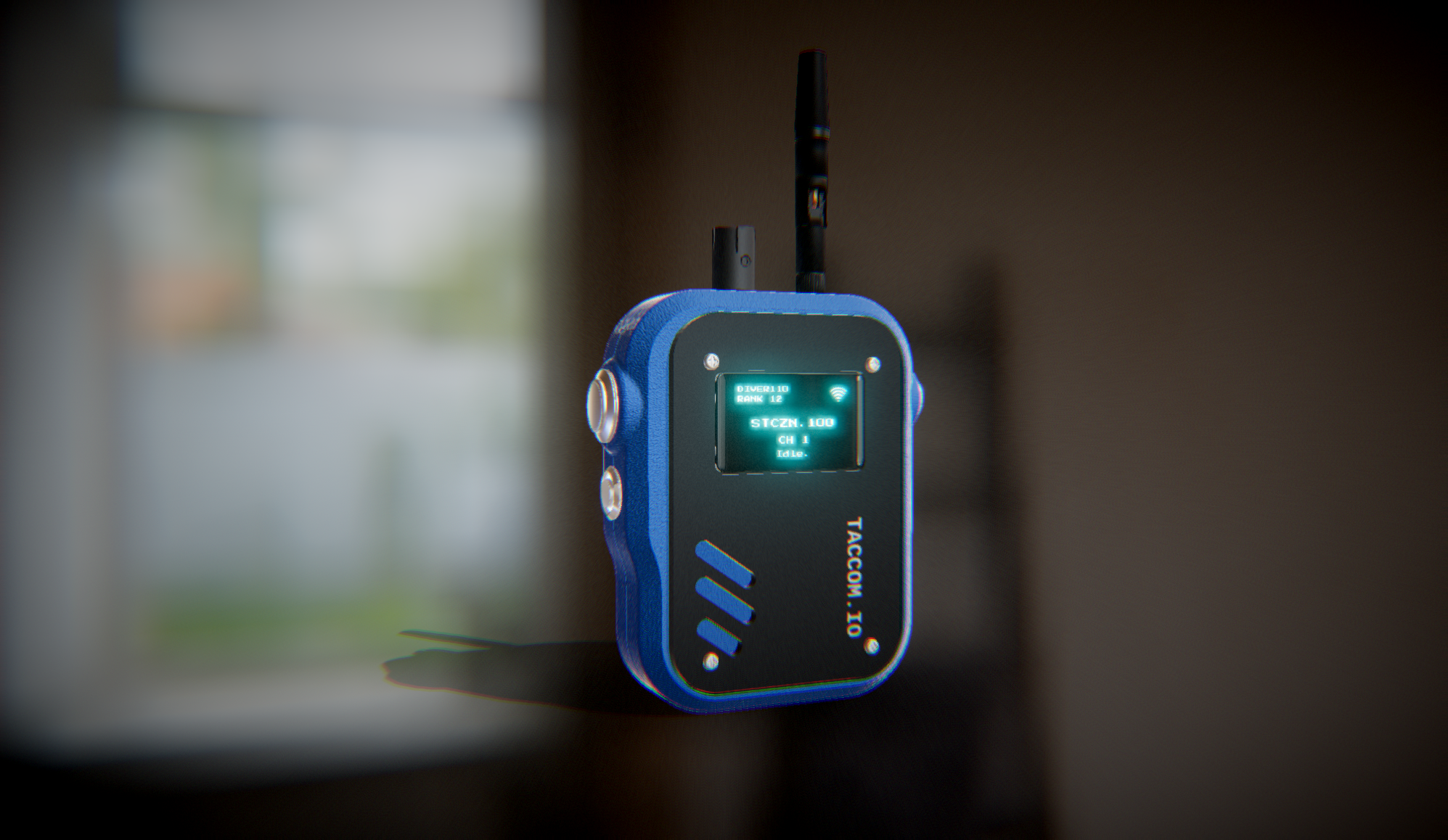
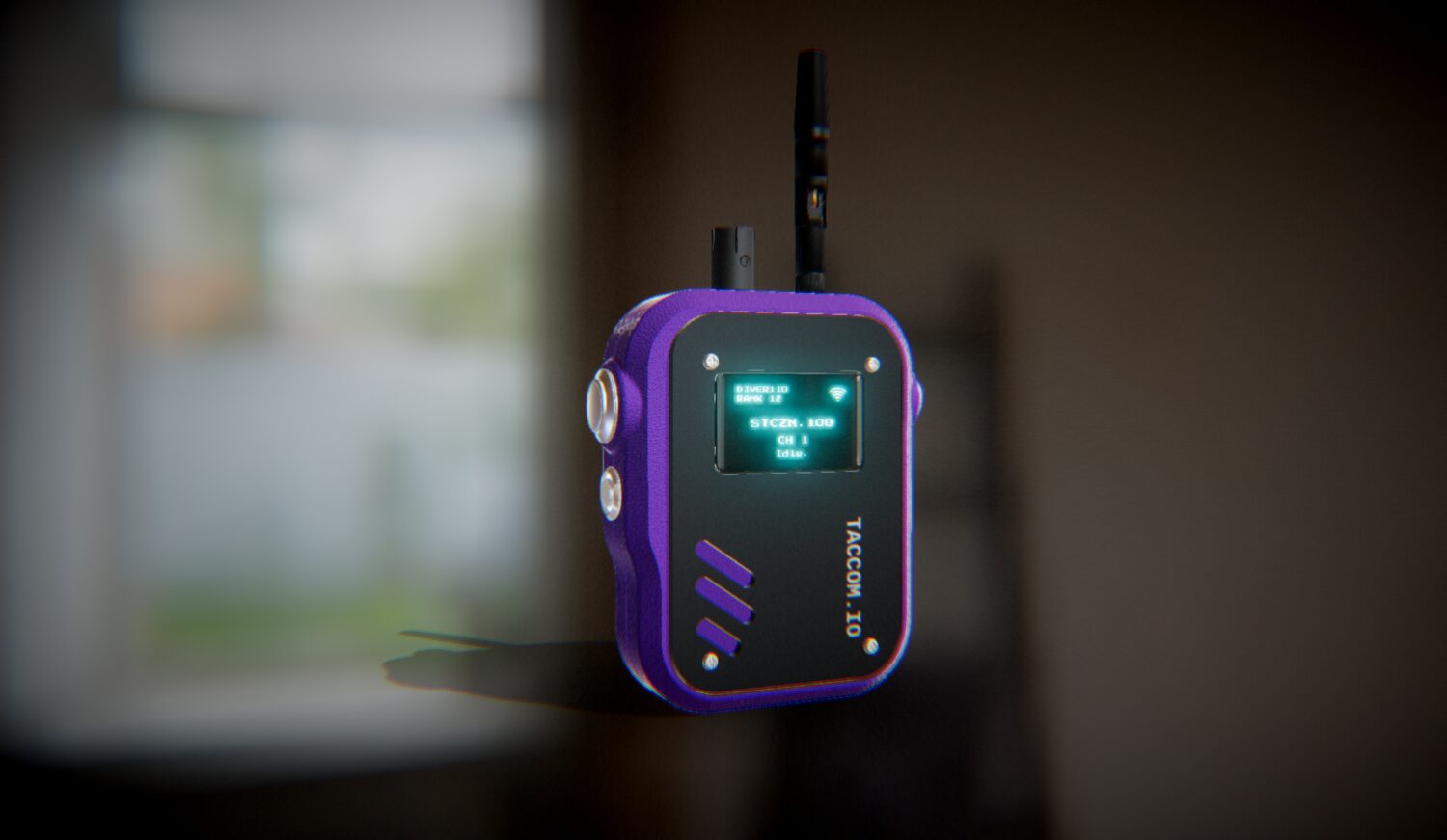
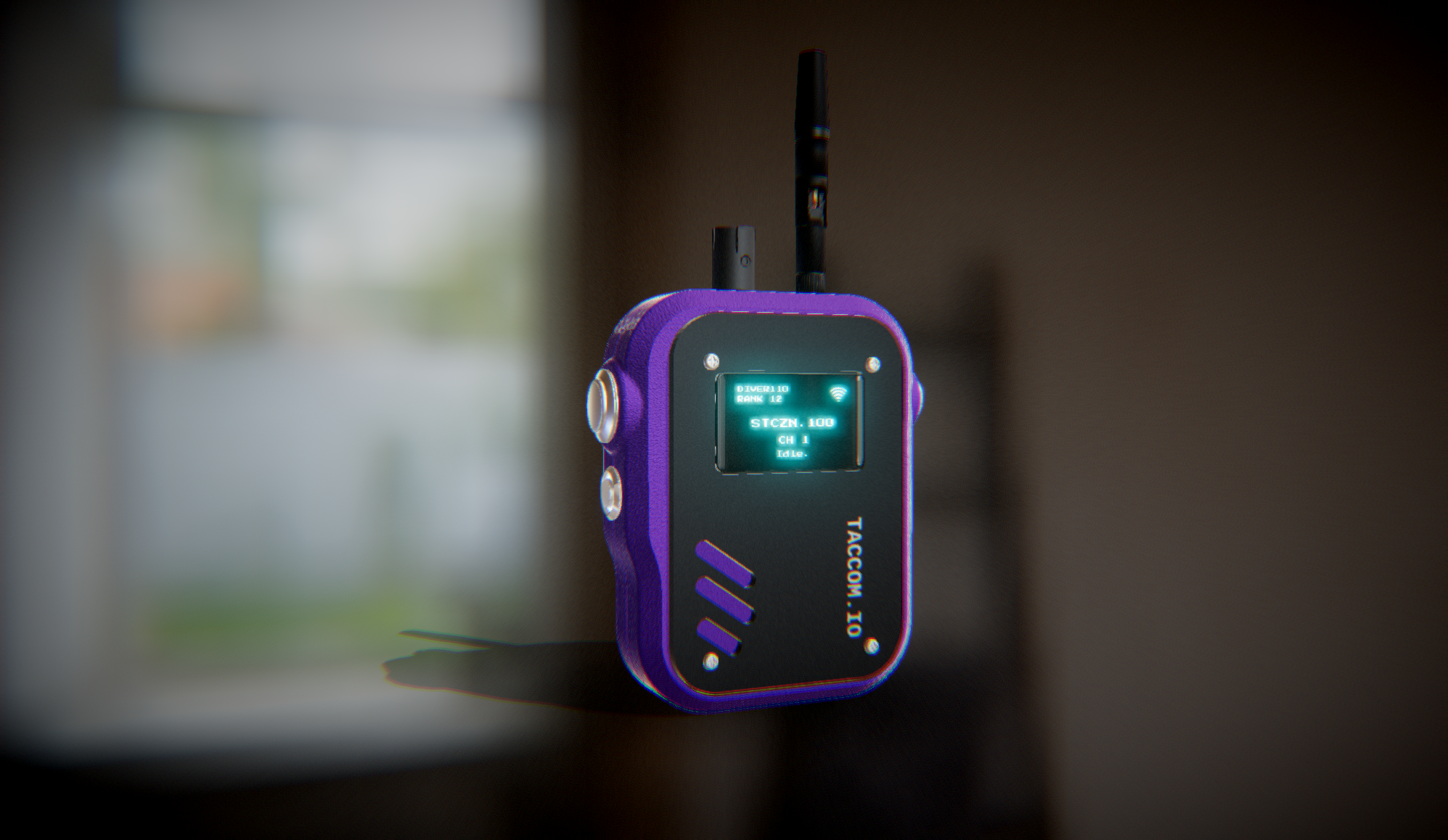
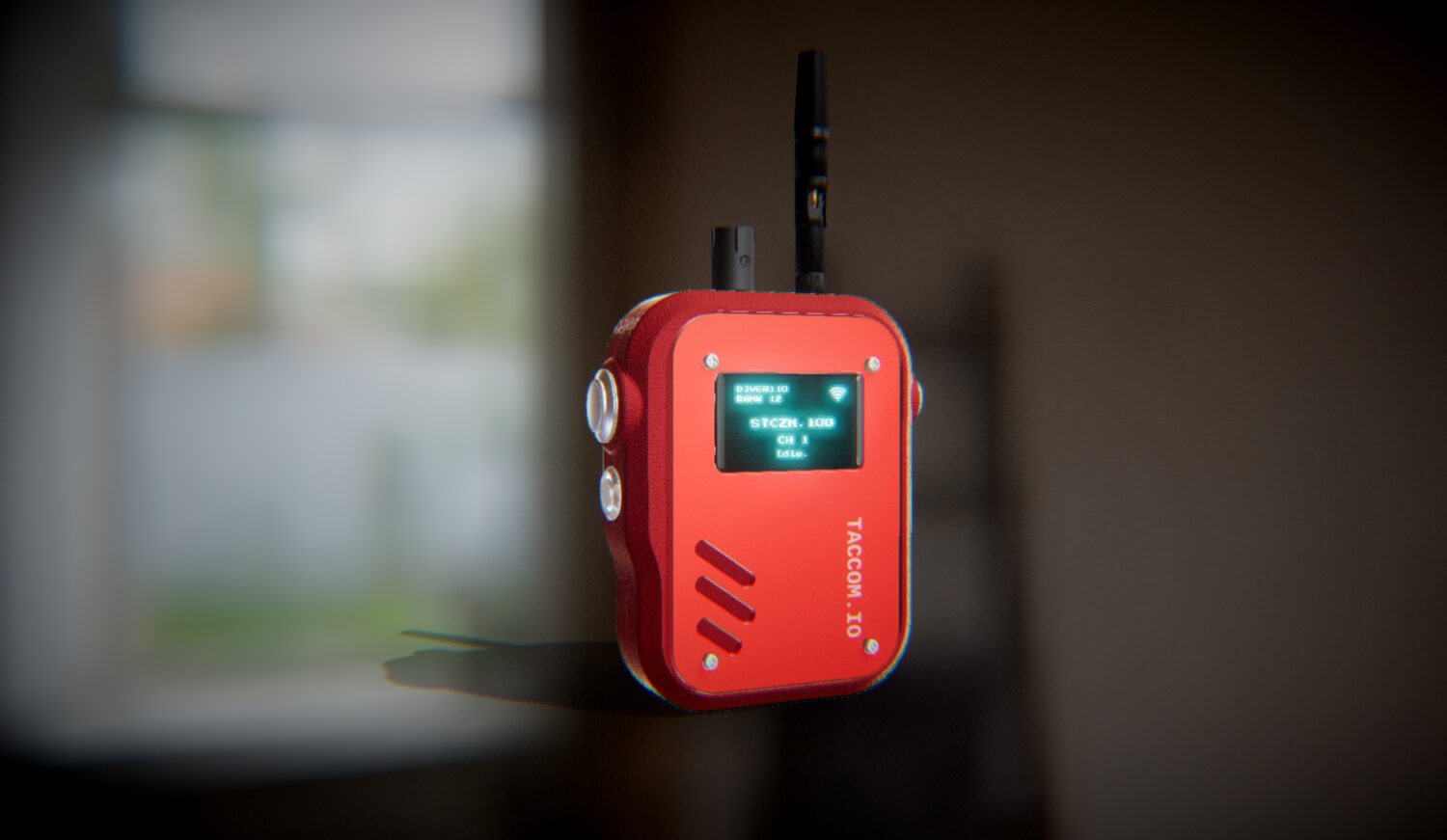
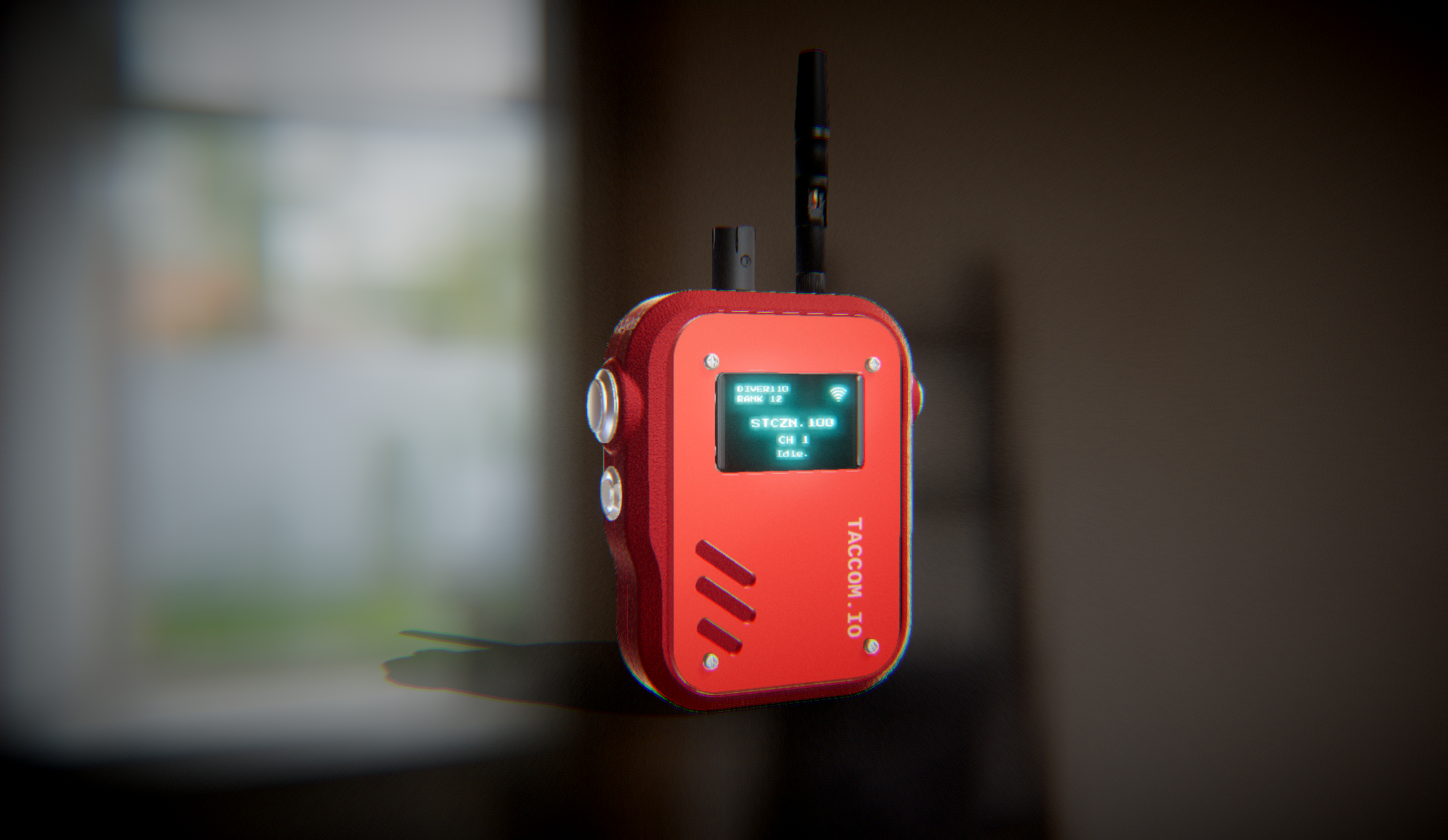
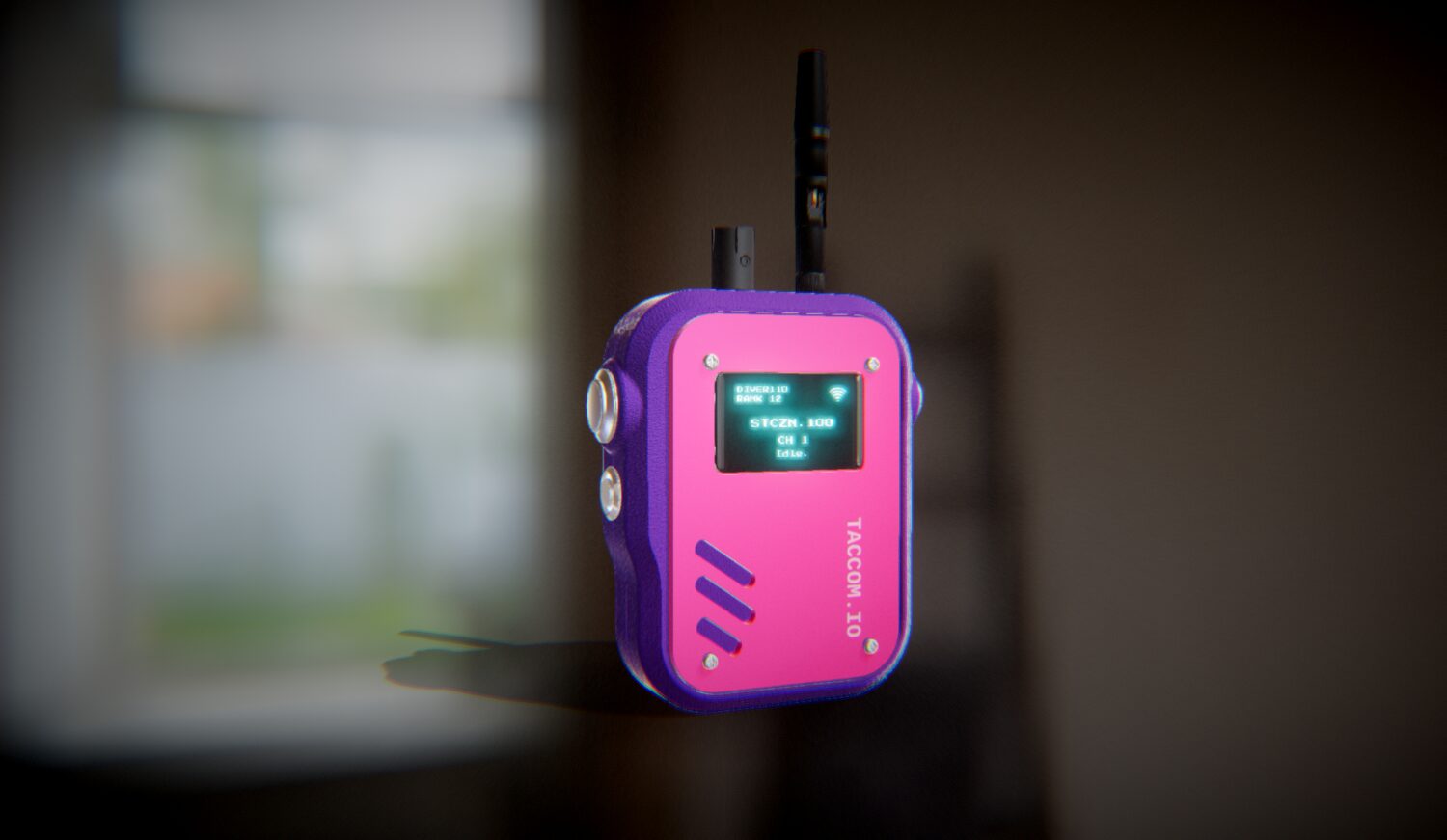
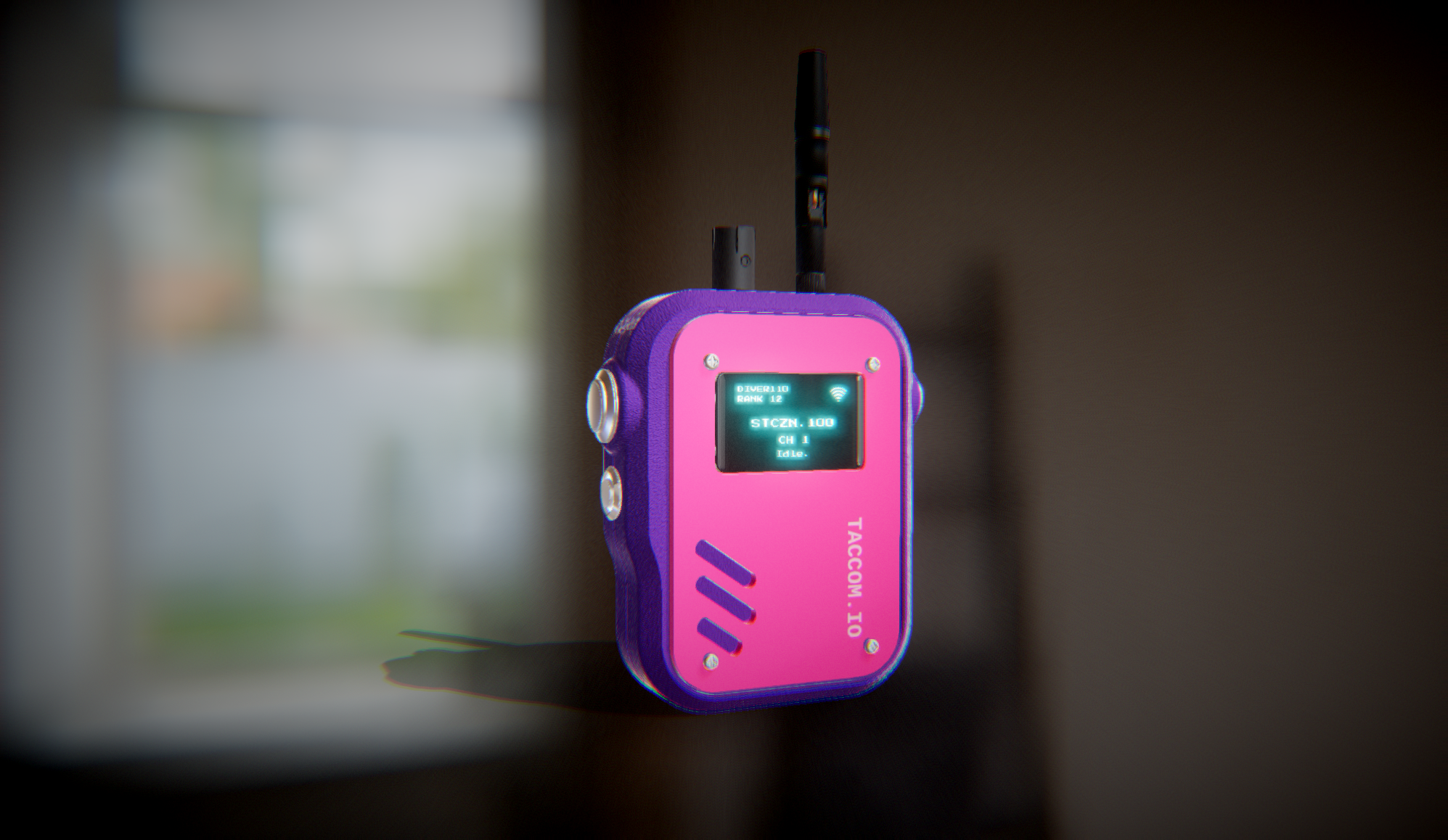
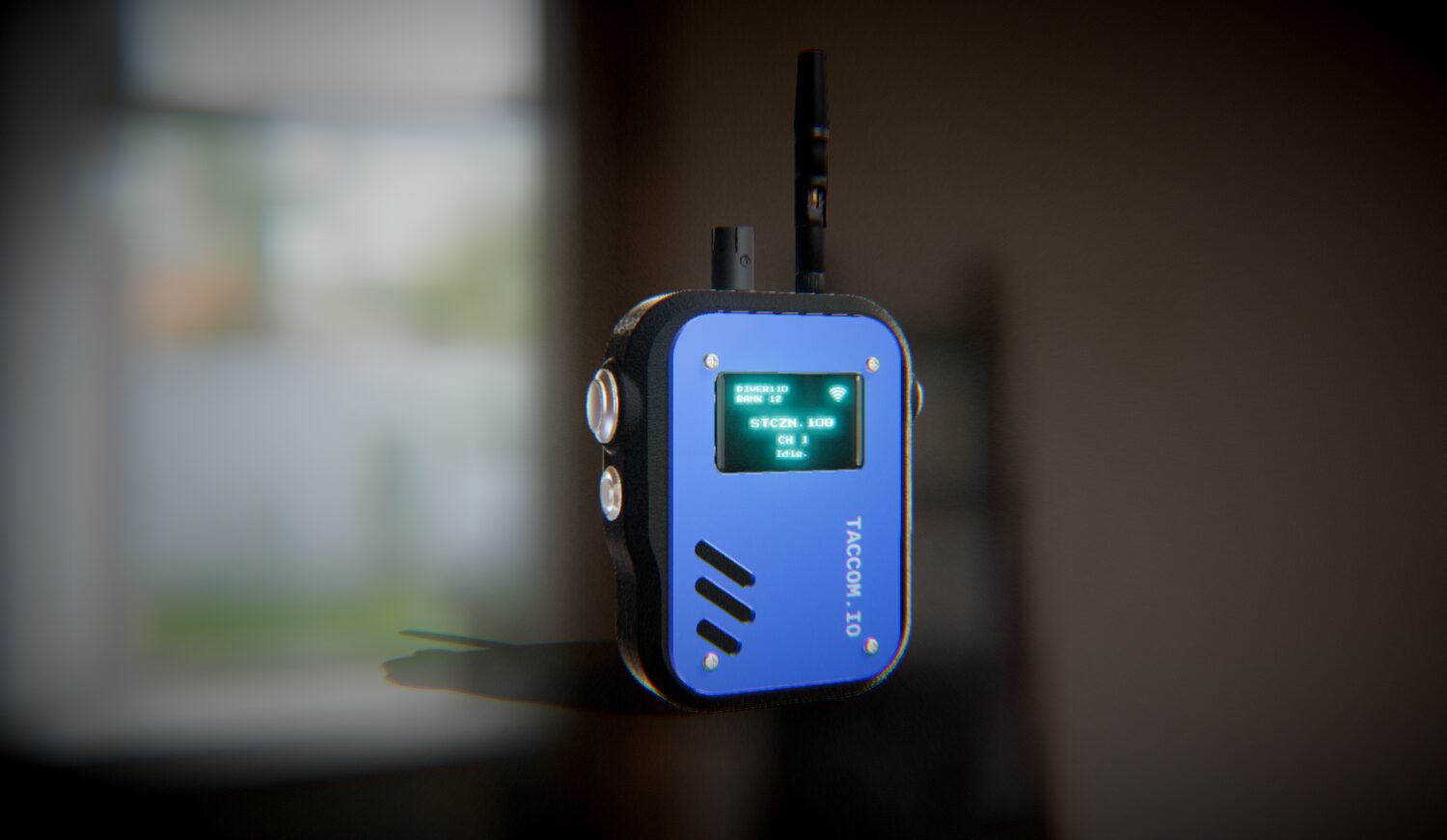
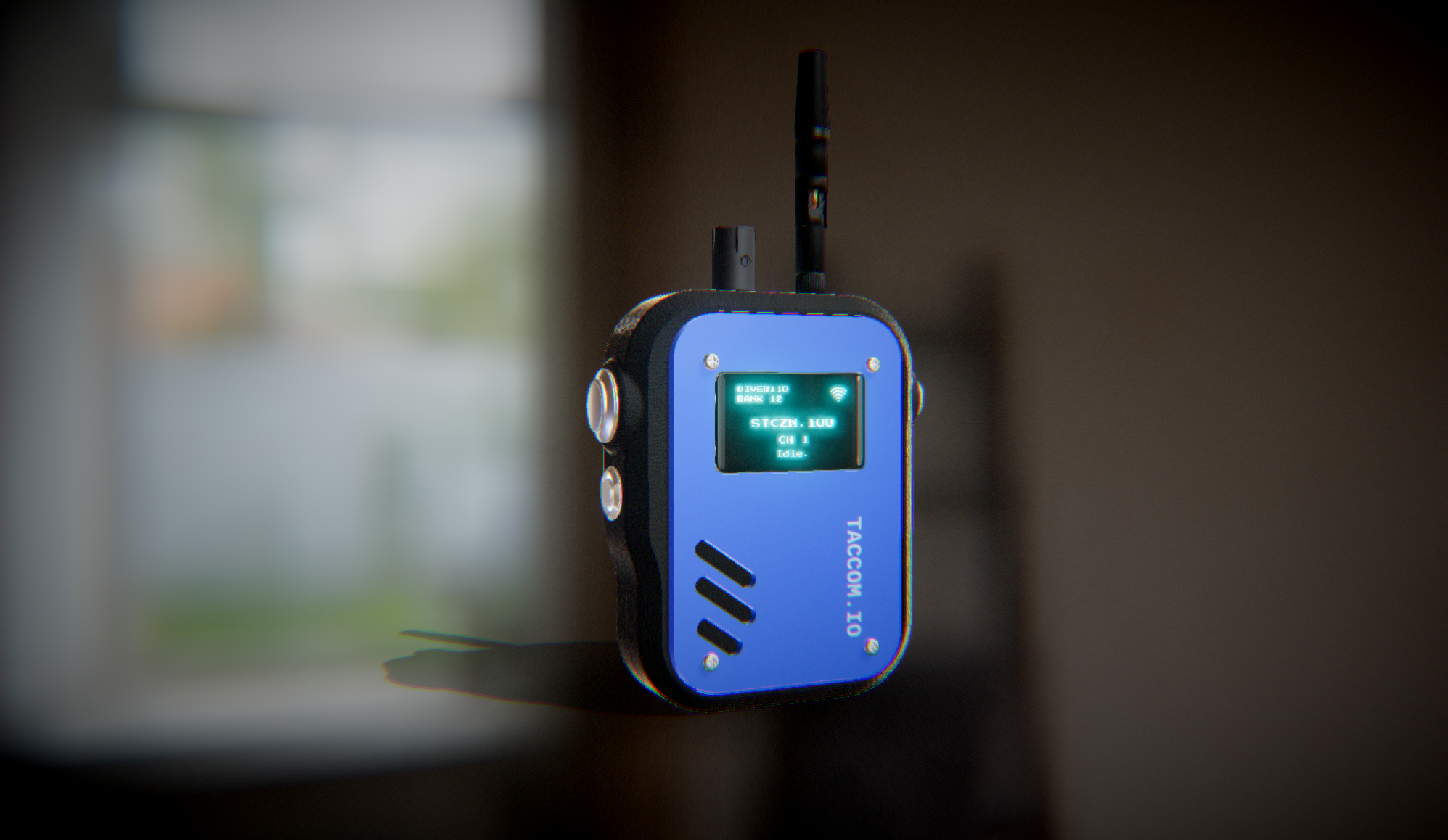
Product renders, 1995 x 1158 PNG
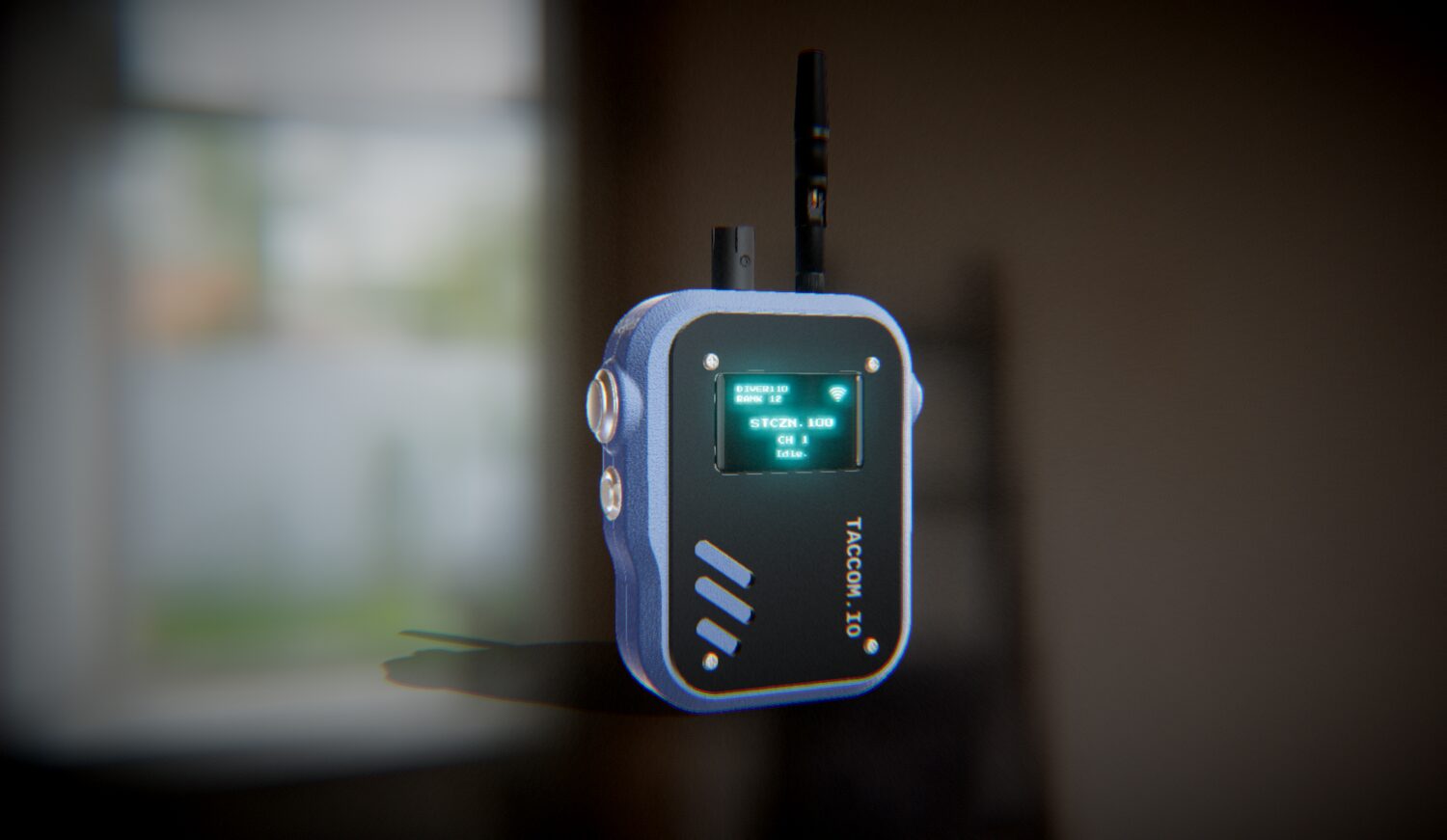
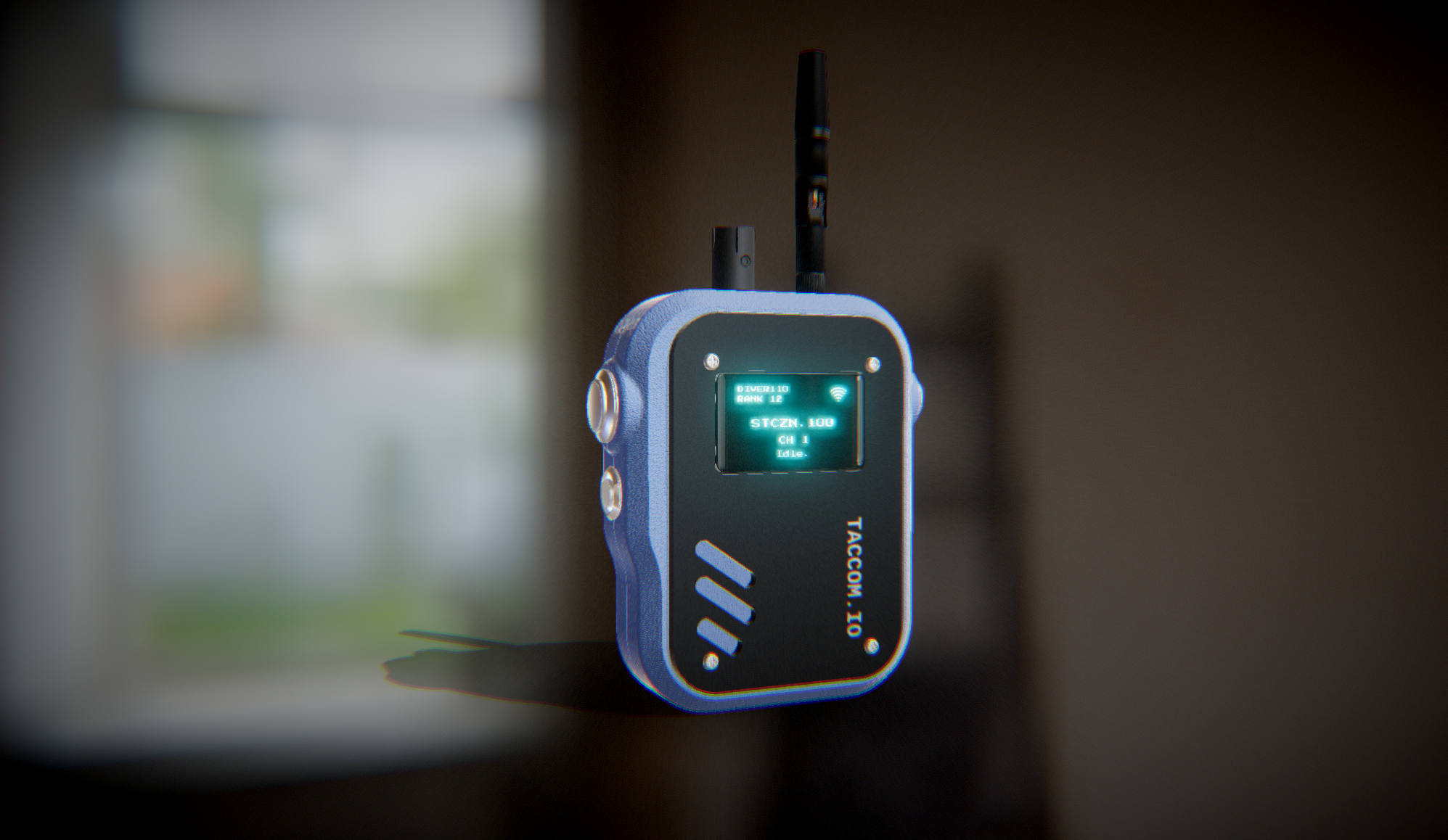
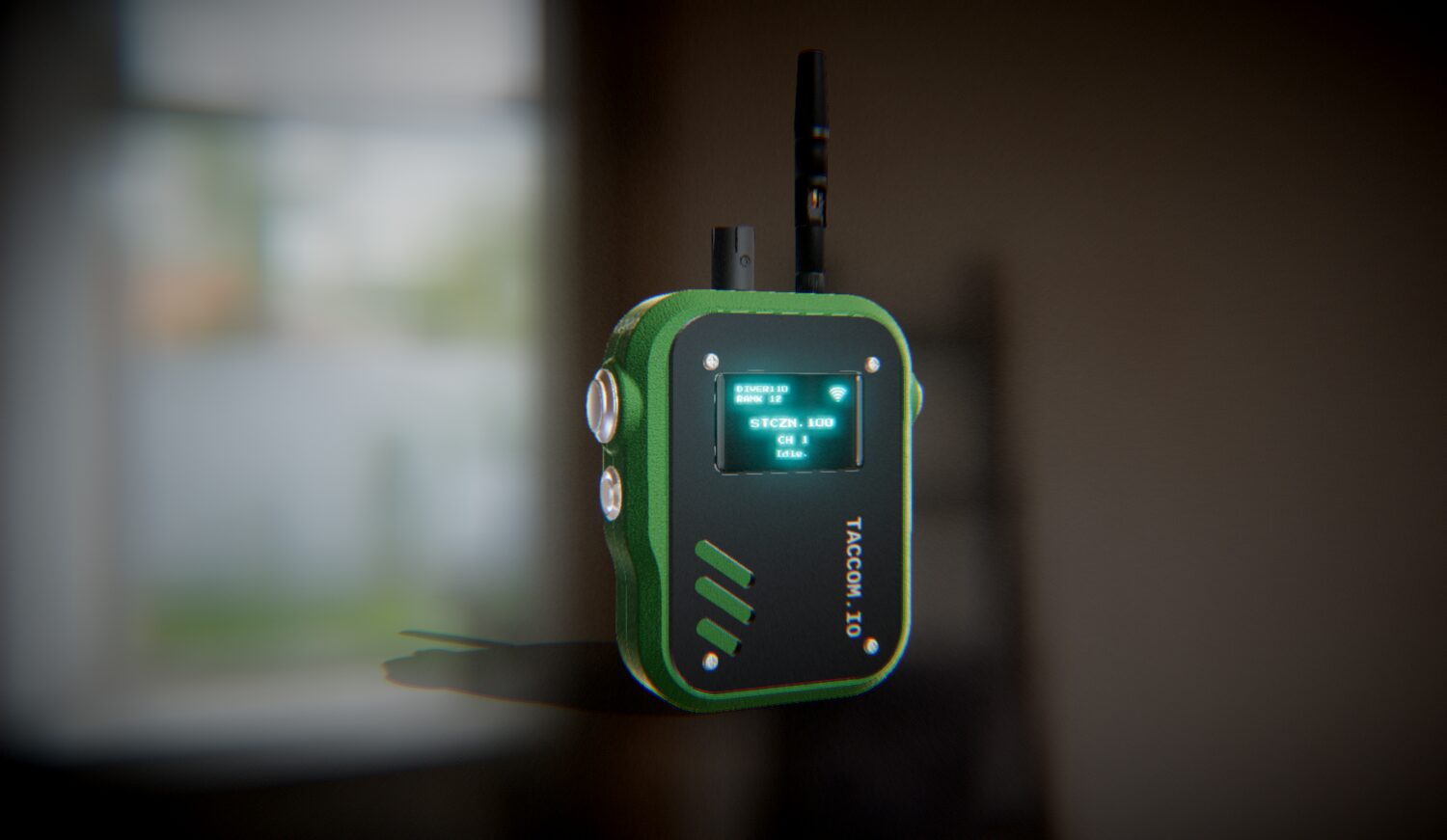
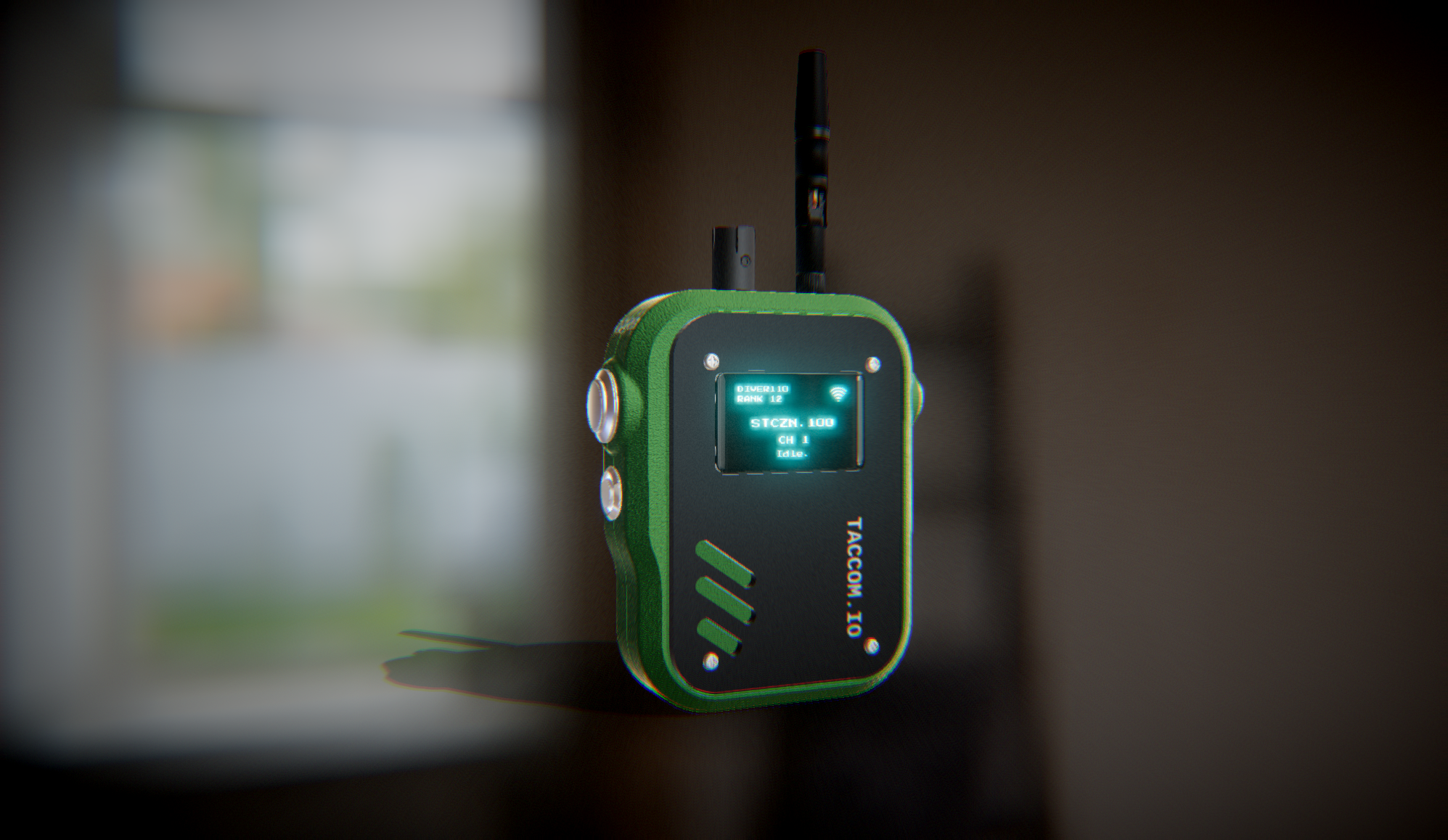
Photography and key art
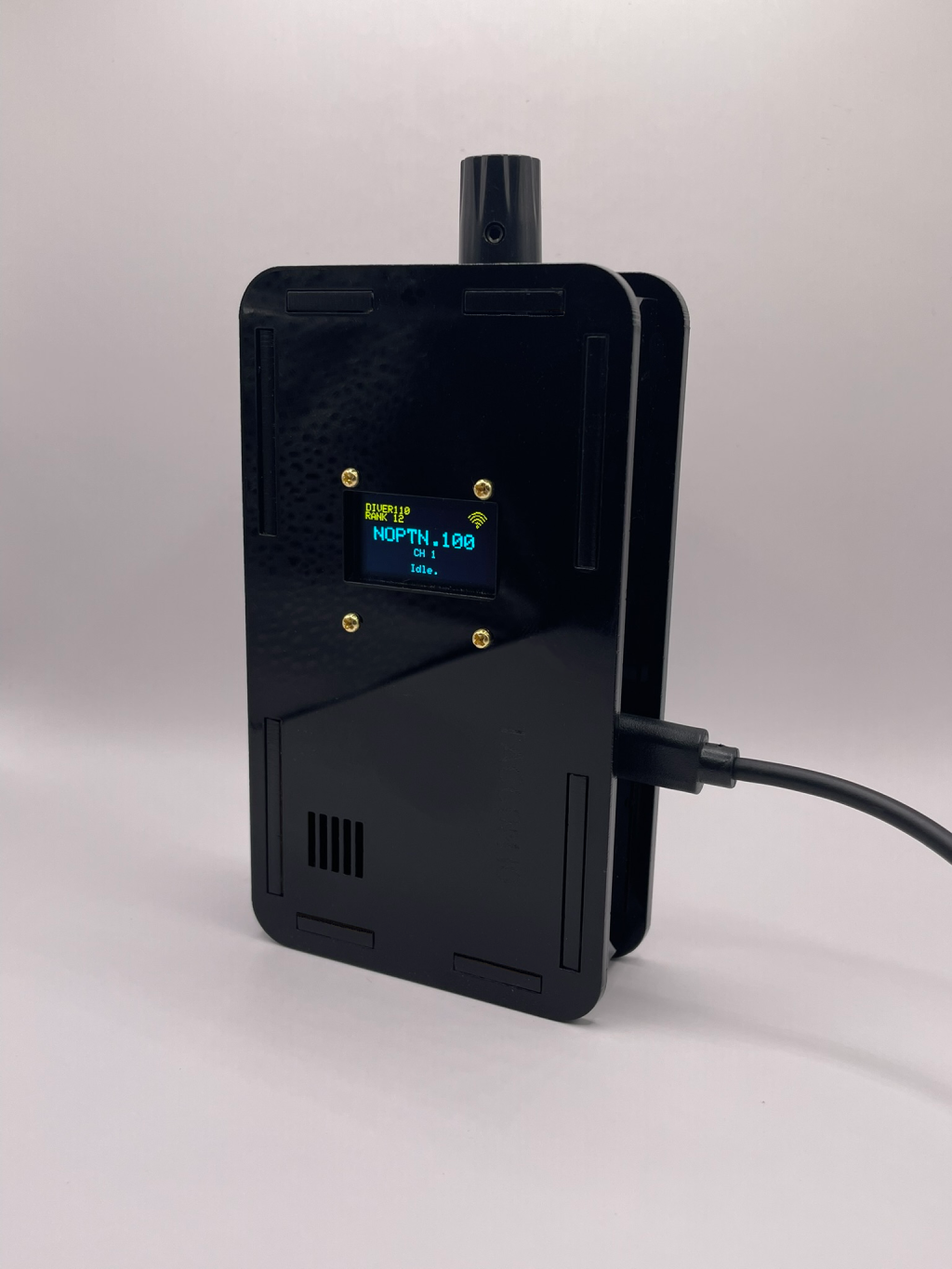
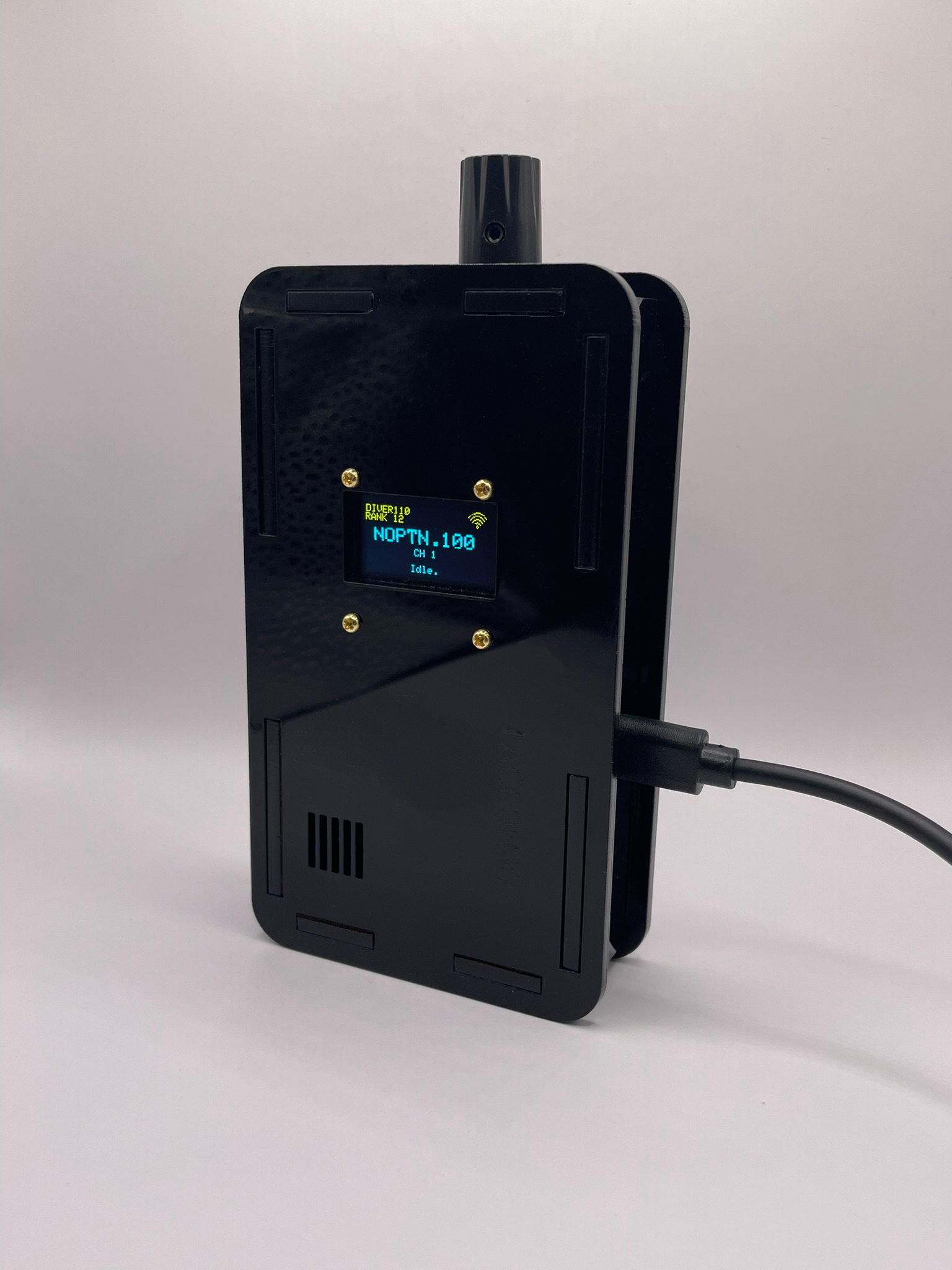
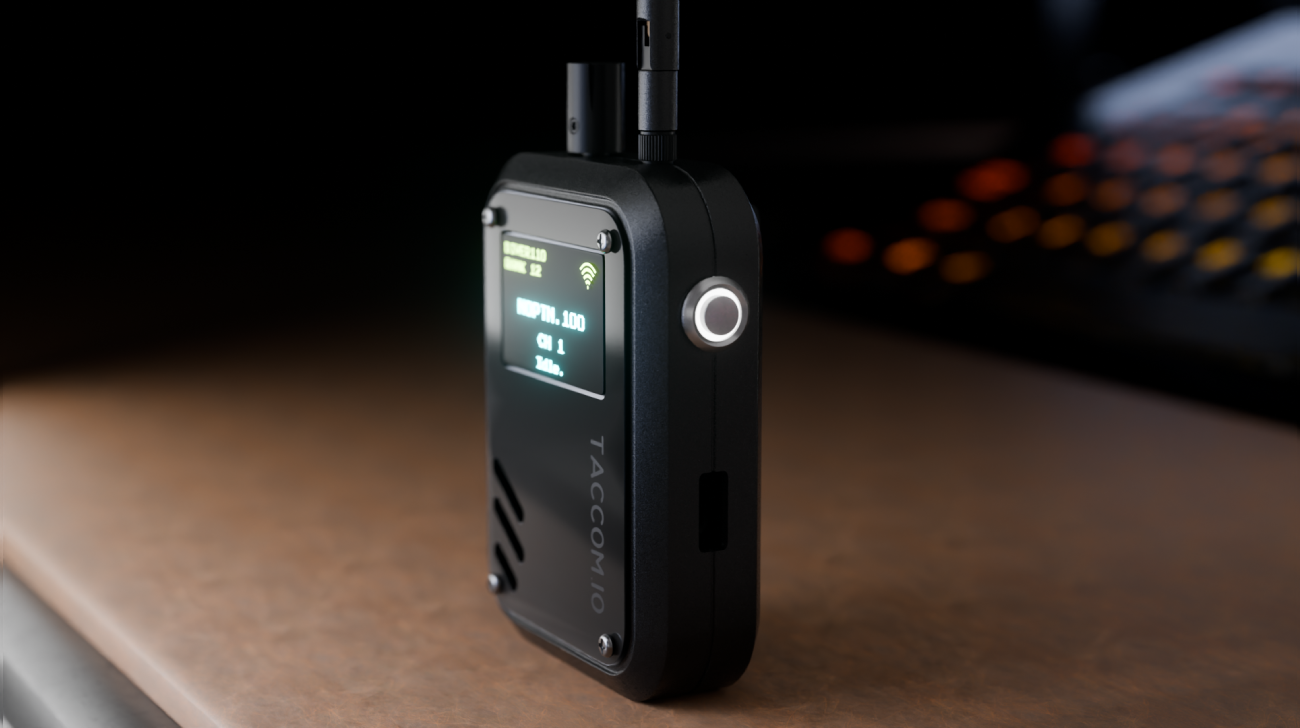
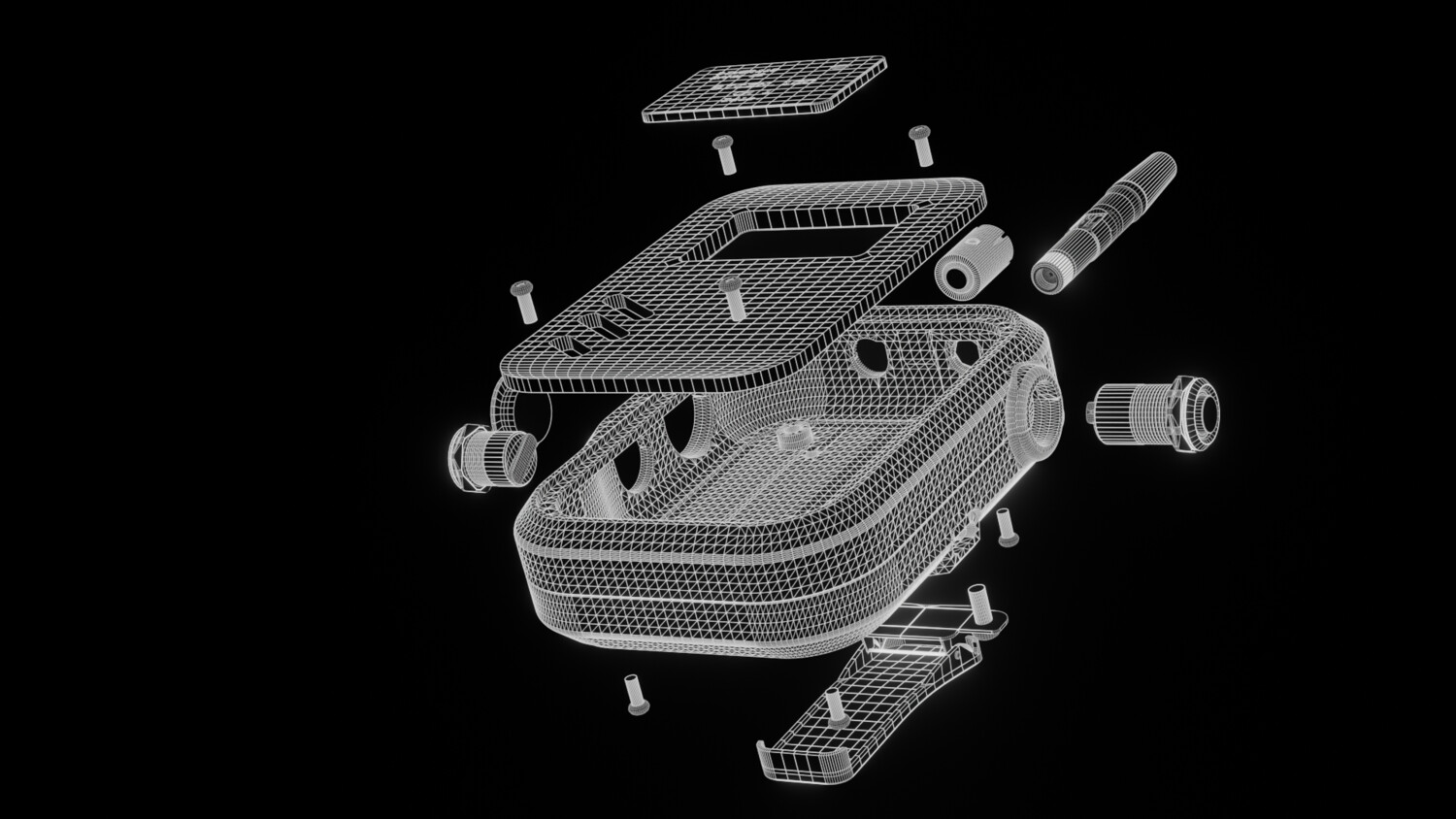

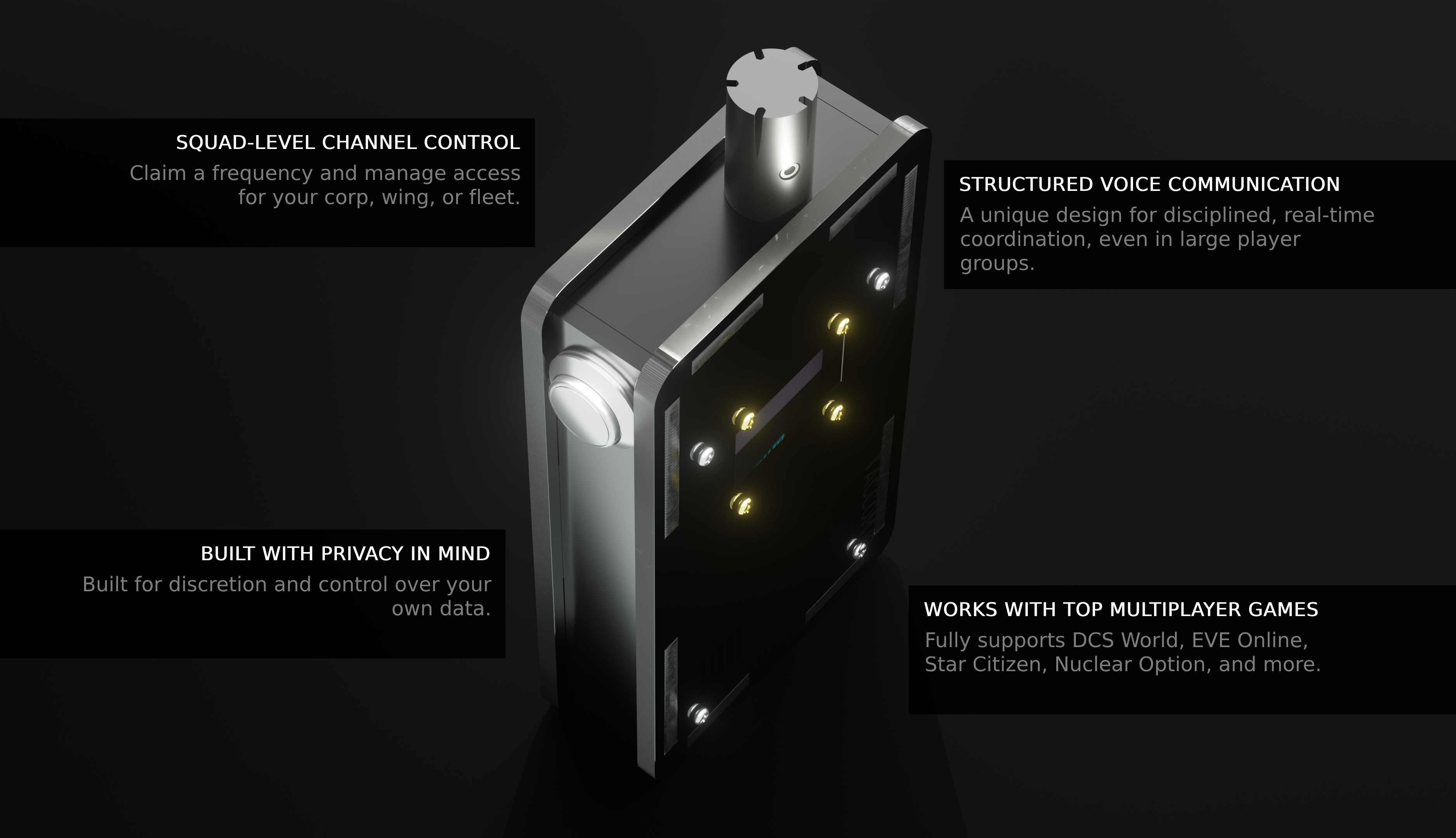
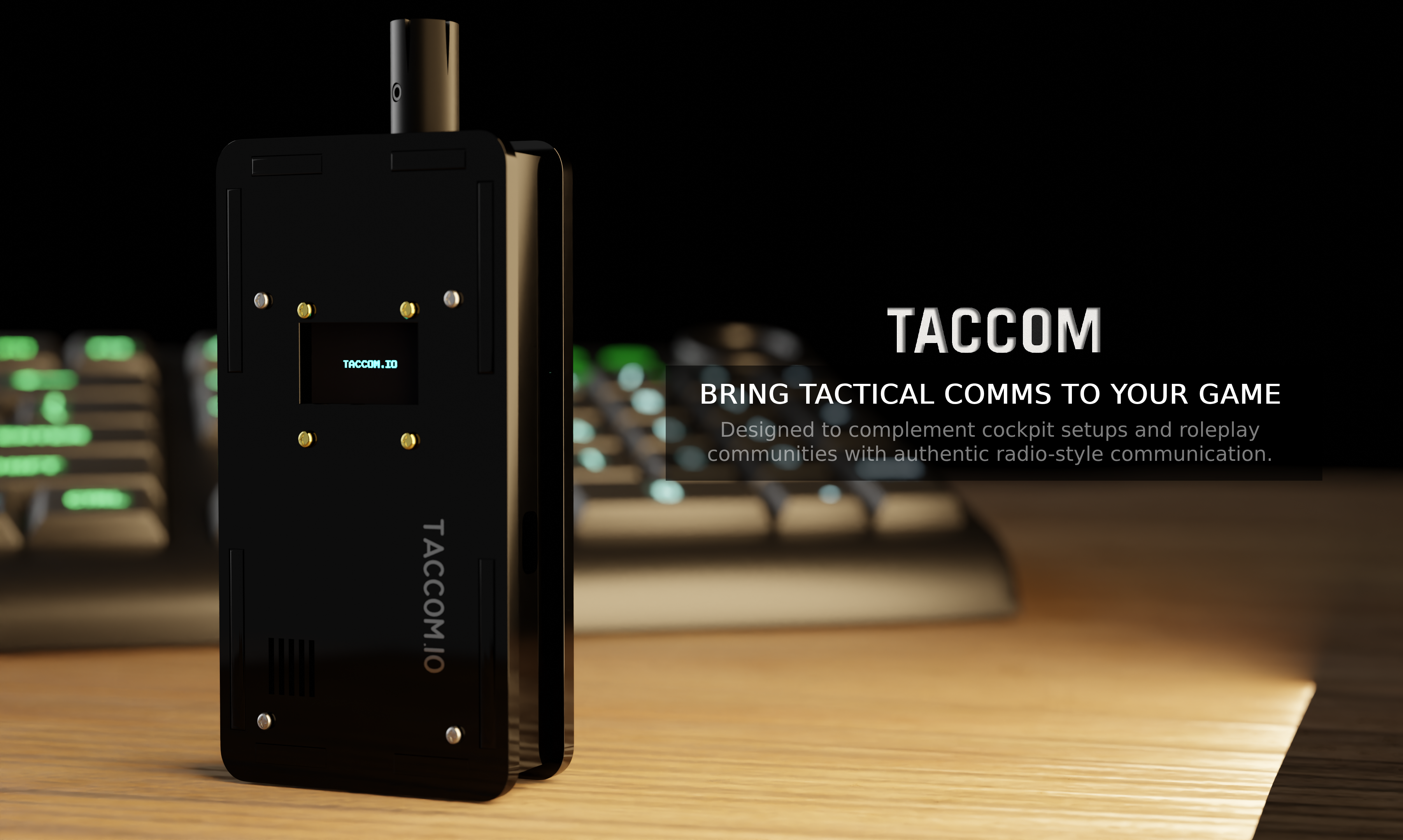
Highest-resolution key art (4K, with taglines baked in): top-down with feature callouts and desk scene. Logo: SVG vector or 1024 px PNG.


B-roll
15-second clip, 4K and 15-second clip, 1080p. Longer cuts: 99-second film, 1080p, 33 MB and 42-second film, 1080p, 44 MB. Need a specific angle, color, or resolution? Email us; renders are generated from the production 3D model and we can produce most requests within a week.
Tech specs
TACCOM v2 Wireless, firmware 2.0.
| Spec | Detail |
|---|---|
| Brain | Espressif ESP32-S3 dual-core microcontroller on a custom PCB |
| Connectivity | 2.4 GHz Wi-Fi. Transmissions push to radios in near real time, with first-run setup through the radio's own hotspot. The radio remembers up to five networks and joins the strongest. |
| Audio | 16-bit voice transmissions, up to 10 seconds per keying. Class-D amplifier and speaker, electret microphone with automatic gain. |
| Display | 128 x 64 OLED showing callsign, rank, channel, and who spoke last. Nine selectable live audio visualizer styles, including spectrum modes rendered with an on-device FFT. A tenth style is hidden behind a secret code. |
| Controls | Machined aluminum push-to-talk, broadcast, and power buttons, plus a rotary dial for tuning and volume |
| Channels | Tunable frequencies per game domain, in the form DCS.122.5. Monitor up to four channels at once, each with its own remembered volume. The broadcast button transmits to every monitored channel simultaneously. |
| Power | Internal rechargeable lithium battery, USB-C charging, runs indefinitely on USB power |
| Body | Customizable shell and faceplate in 7 shell and 10 faceplate colors, 8 laser-engraved panel patterns, custom image printing, and callsign engraving. Configured in a live 3D customizer at taccom.io/create. |
| Feedback | Radio-authentic sound design: key-up and key-down tones, incoming-transmission chirp, and a roger beep with a squelch tail whose static scales with Wi-Fi signal strength |
Boilerplate
Approved descriptions you can lift as-is.
Short description
Long description
TACCOM’s MQP allows for efficient and disciplined communication in large multiplayer environments, enhancing the realism and immersion for virtual pilots. It’s a tool that ensures seamless coordination on the digital battlefield, reflecting the precision expected by real-world aviators. TACCOM bridges the gap between in-game action and professional-grade communication.
Key points
- Fully supports DCS World, EVE Online, Star Citizen, Nuclear Option, and more.
- A unique design for disciplined, real-time coordination, even in large player groups.
- Claim a frequency and manage access for your corp, wing, or fleet.
- Built with discretion and control over your own data in mind.
- Real knobs and buttons for fast channel switching and volume control.
- Control access, configure settings, and monitor comms through a clean online interface at TACCOM.IO.
- Tune into active frequencies like Jita (EVE.100) or the TACCOM Nuclear Option Server (NOPTN.110), and instantly hear who's around.
- Less gatekeeping - no need for invites, friend requests, or hidden server links.
- Meet new players, join spontaneous ops, or discover new groups on the fly.
- Still have the option to manage your own private frequency for structured, private comms.
- Unlike other solutions, which can hide users behind walled-off servers and DMs, TACCOM keeps comms open—like a real radio.
Journalist FAQ
The questions we get first.
What does it cost and when does it ship?
Radios start at $99, are built to order, and ship within 7 days. Customization options add $1 to $20 each.
Do I need the hardware to try it?
No. A free account at taccom.io gets you a callsign and live browser listening on public frequencies, and the 3D customizer is open to everyone. The hardware is the full experience, but you can hear real traffic today.
Is player voice public?
Yes and no. Public frequencies are public, like real radio, and their traffic is replayable on taccom.io. Operators can restrict their transmissions to radio owners only, and squads can broadcast over private frequencies. Players can lock frequencies so only their access list can hear it, on the device and on the web.
Which games does it work with?
TACCOM has dedicated frequency bands for DCS World, Star Citizen, EVE Online, and Nuclear Option, plus an open Misc band. It runs alongside any game rather than integrating with game clients, so there is nothing to install and nothing for an anti-cheat to object to.
Media contact
Press mail goes straight to the founder.
Edward Melville / BlueUplink
Press@taccom.io
Product: taccom.io and taccom.io/create
Community: forums
We answer press email within one business day.
TACCOM. Keep the channel open.